Signs and Symptoms of Blood Clots
Deep Vein Thrombosis
Deep vein thrombosis (DVT) occurs when a blood clot forms in one of the deep veins of your body, usually in your legs, but sometimes in your arm. The signs and symptoms of a DVT may include but are not limited to:
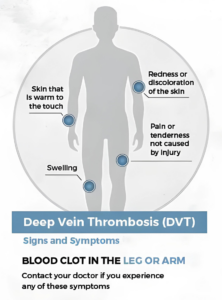
- Swelling, usually in one leg (or arm)
- Leg pain or tenderness often described as a cramp or charley horse
- Reddish or bluish skin discoloration
- Leg (or arm) warm to touch
-
-
These symptoms of a blood clot may feel similar to a pulled muscle or a charley horse, but may differ in that the leg (or arm) may be swollen, slightly discolored, and warm.
Contact your doctor as soon as possible if you have any of these symptoms, because you may need treatment right away. If you need help finding a doctor, please click here.
Learn more about how a DVT is diagnosed here.
Pulmonary Embolism
Clots can break off from a DVT and travel to the lung, causing a pulmonary embolism (PE), which can be fatal. The signs and symptoms of a PE may include but are not limited to:
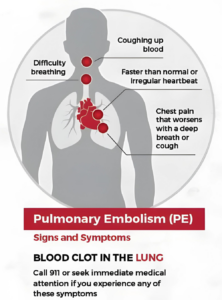
- Sudden shortness of breath
- Chest pain that’s sharp and stabbing; may get worse with deep breath
- Rapid heart rate
- Unexplained cough, sometimes with bloody mucus
Call an ambulance or 9-1-1 immediately for treatment in the ER if you experience these PE symptoms.
Learn more about how a PE is diagnosed here.
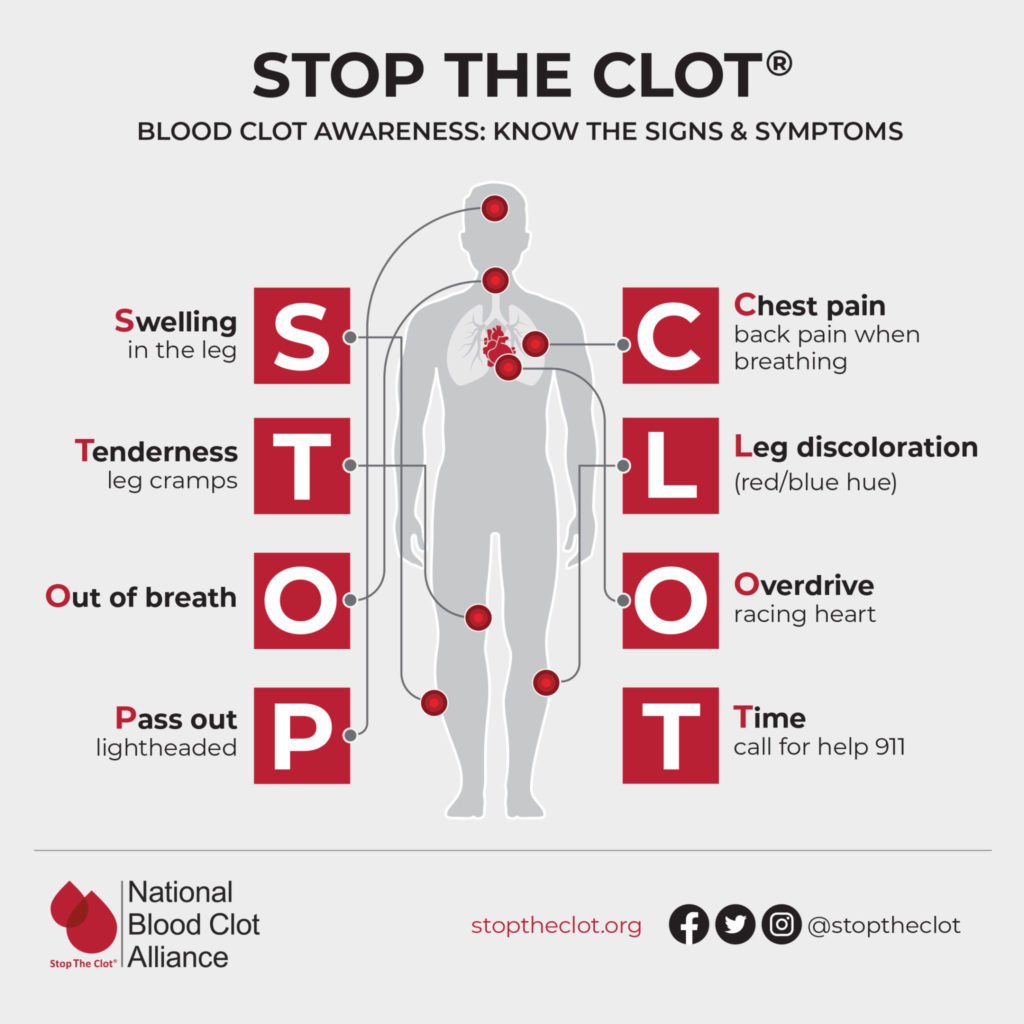
Stop the Clot Acronym
Share our Stop the Clot acronym to highlight the signs and symptoms of blood clots. This information can save your life or the life of someone you know. Download a PDF version here.
Learn More and Get Involved
Learn more about life-saving information about blood clots here.
Learn how you can help and support NBCA’s mission.